
However, many people use the terms interpreter and translator interchangeably, even though they refer to two very different professions. Understanding the difference between an interpreter and a translator can help you choose the right language service for your specific needs.
In this guide, we'll explain what interpreters and translators do, compare their skills, highlight the situations where each is needed, and help you determine which service is right for you.
What Is an Interpreter?
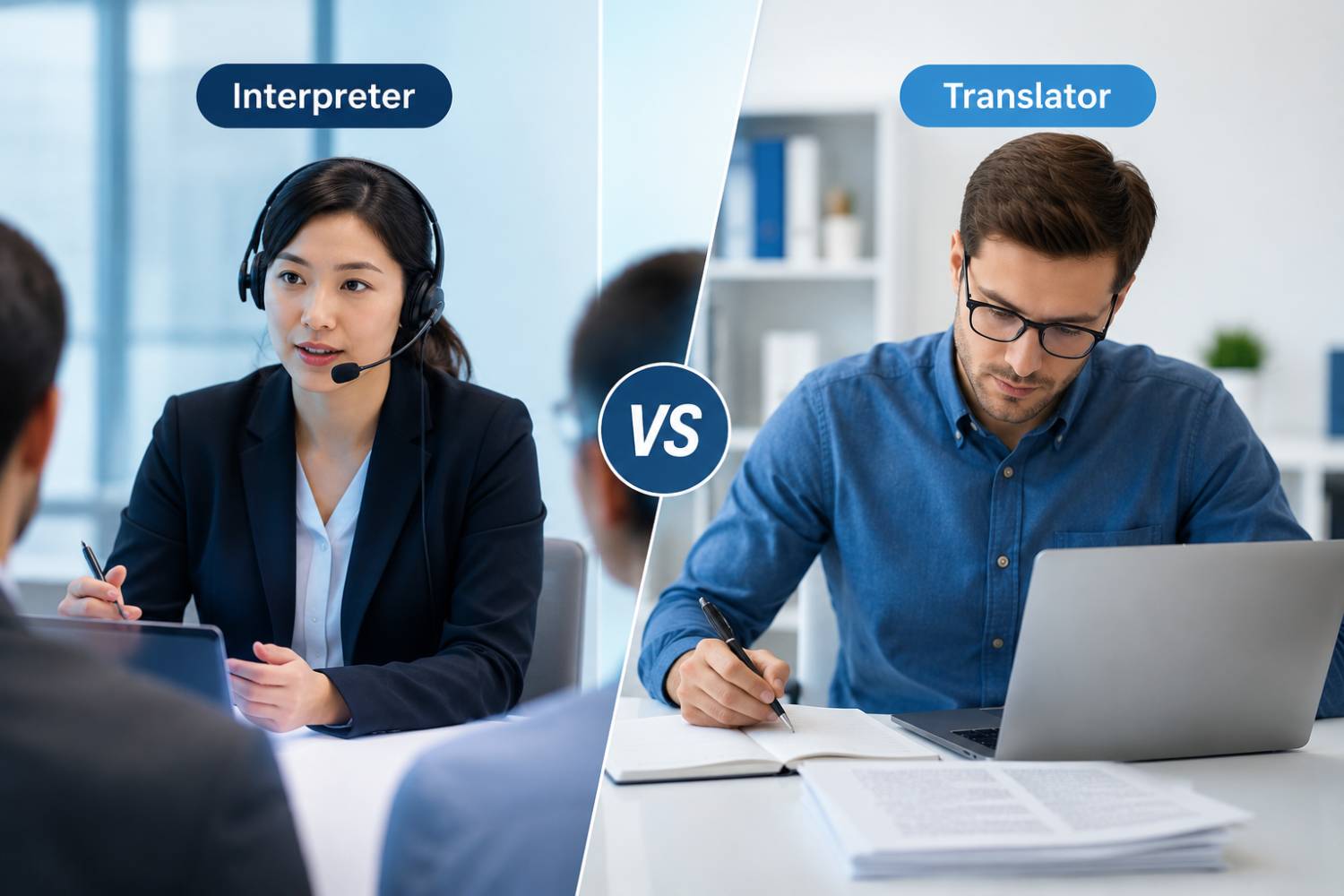
An interpreter converts spoken language from one language into another in real time. Their primary goal is to facilitate live communication between people who speak different languages.
Unlike translators, interpreters work with spoken conversations rather than written documents. They must listen carefully, understand the speaker's intent, and accurately communicate the message almost instantly.
Interpreters are commonly found in:
Hospitals
Courtrooms
Business meetings
Conferences
Government offices
Tourist destinations
Immigration interviews
Educational institutions
Because conversations happen live, interpreters must think quickly while maintaining accuracy, neutrality, and professionalism.
What Is a Translator?
A translator works with written content instead of spoken language.
Their responsibility is to convert documents, articles, contracts, books, websites, manuals, or marketing materials from one language into another while preserving the original meaning, tone, and style.
Unlike interpreters, translators have time to:
Research terminology
Edit their work
Verify grammar
Ensure cultural accuracy
Maintain consistency
Translation projects often include:
Legal contracts
Medical reports
Academic papers
Product manuals
Business proposals
Website localization
Books and eBooks
Marketing materials
Interpreter vs Translator: The Main Difference
The biggest difference lies in the type of communication.
Interpreter
Translator
Works with spoken language
Works with written language
Communicates in real time
Has time to edit and revise
Requires excellent listening skills
Requires excellent writing skills
Often works face-to-face or remotely
Usually works independently
Focuses on live conversations
Focuses on documents and text
Must react instantly
Can research terminology
Although both professionals bridge language barriers, the skills required for each role are quite different.
Skills Required for an Interpreter
Professional interpreters need much more than fluency in two languages.
Important skills include:
Excellent Listening Ability
Interpreters must understand accents, dialects, and different speaking speeds.
Strong Memory
They often remember long sentences before delivering the interpretation.
Fast Thinking
Unlike translators, interpreters cannot pause to research vocabulary during a conversation.
Cultural Awareness
Understanding cultural differences helps prevent misunderstandings.
Neutrality
Professional interpreters communicate exactly what is said without adding personal opinions.
Skills Required for a Translator
Translators focus on producing polished written content.
Essential skills include:
Outstanding writing ability
Excellent grammar
Subject matter expertise
Research skills
Attention to detail
Editing and proofreading
Knowledge of localization
Many translators specialize in specific industries such as medicine, law, finance, engineering, or technology.
Types of Interpretation
Interpretation includes several specialized methods depending on the situation.
Simultaneous Interpretation
The interpreter speaks almost at the same time as the original speaker.
Commonly used for:
International conferences
Live broadcasts
Large business events
Diplomatic meetings
Consecutive Interpretation
The speaker pauses every few sentences while the interpreter delivers the message.
This method is common in:
Medical appointments
Business meetings
Legal consultations
Government interviews
Whispered Interpretation
The interpreter quietly translates directly to one listener while another person speaks.
Often used during:
Court hearings
Business negotiations
VIP meetings
Remote Interpretation
Technology now allows interpreters to assist clients through:
Video calls
Telephone conversations
Online meetings
This has made language support much more accessible for people around the world.
Types of Translation
Translation services also cover many specialized fields.
Legal Translation
Legal documents require precise terminology because even small mistakes can have serious consequences.
Examples include:
Contracts
Court documents
Immigration papers
Certificates
Medical Translation
Medical translators work with sensitive healthcare documents such as:
Medical records
Laboratory reports
Clinical research
Patient instructions
Accuracy is critical because errors may affect patient safety.
Technical Translation
Technical translators specialize in:
User manuals
Engineering documents
Product specifications
Software documentation
Marketing Translation
Marketing translation goes beyond literal translation by adapting content to local culture, consumer behavior, and brand voice.
When Do You Need an Interpreter?
Choose an interpreter whenever communication happens live.
Examples include:
Visiting a doctor overseas
Attending a business meeting
Participating in a conference
Speaking with government officials
Meeting a lawyer
Negotiating contracts
Guided travel experiences
If people are actively speaking, interpretation is the appropriate service.
When Do You Need a Translator?
Choose a translator whenever you're working with written content.
Examples include:
Translating contracts
Translating websites
Translating books
Translating certificates
Translating manuals
Translating business reports
Translating marketing campaigns
Can One Person Be Both an Interpreter and a Translator?
Yes, but not always.
Many language professionals offer both services, especially freelancers. However, being excellent at translation does not automatically mean someone is equally skilled at interpretation.
Interpreting requires rapid decision-making, active listening, and verbal communication under pressure, while translation demands careful writing, editing, and terminology research.
For complex legal or medical situations, it is often best to work with professionals who specialize in the specific service you need.
Why Choosing the Right Language Professional Matters
Hiring the wrong type of language professional can create misunderstandings, delays, or costly mistakes.
For example:
Bringing a translator to a live meeting won't help real-time conversations.
Hiring an interpreter to translate a legal contract may result in incomplete documentation.
Selecting the correct service improves communication, saves time, and reduces risk.
Finding Professional Language Support
Whether you're traveling, relocating, attending business meetings, visiting hospitals, or handling legal matters abroad, finding qualified language professionals is essential.
Platforms like Hebosa make this process much easier. Hebosa connects you with verified local experts — interpreters, assistants, and guides — in the country you're visiting. For medical, business, legal, or everyday needs. This allows travelers, international students, business professionals, and expatriates to quickly connect with trusted local support whenever language assistance is needed.
Specialized Interpreter Services
Depending on your situation, different interpreting services may be required.
If you're looking for healthcare communication support, explore Medical Interpreter Services.
Businesses expanding internationally often benefit from Business Interpreter Services during meetings, negotiations, and conferences.
Individuals involved in legal proceedings may require Legal Interpreter Services to ensure accurate communication in courts, law firms, and official appointments.
Travelers visiting a foreign country can improve their experience with Travel Interpreter Services, making local communication easier and more enjoyable.
Conclusion
Although interpreters and translators both help overcome language barriers, they perform distinctly different roles.
An interpreter facilitates real-time spoken communication, while a translator works with written content. Choosing the appropriate professional depends entirely on whether your communication is spoken or written.
Whether you're attending a medical appointment, signing legal documents, negotiating international business, or traveling abroad, selecting the right language expert ensures accurate communication, builds trust, and helps avoid costly misunderstandings.
As international travel and global business continue to grow, professional interpreting and translation services are becoming more valuable than ever.
Frequently Asked Questions
1. What is the biggest difference between an interpreter and a translator?
An interpreter works with spoken language during live conversations, while a translator converts written documents from one language into another.
2. Can an interpreter also translate documents?
Some professionals offer both services, but interpreting and translation require different skill sets. Specialized professionals are usually recommended for complex projects.
3. When should I hire an interpreter instead of a translator?
You should hire an interpreter whenever communication happens in real time, such as medical appointments, business meetings, legal consultations, conferences, or travel situations.
4. Are medical and legal interpreters specially trained?
Yes. Professional medical and legal interpreters typically receive specialized training and understand the terminology, ethics, and confidentiality requirements of their respective fields.

