
Educational Interpreting Services for Schools, Universities and Students
Education brings people together, but language barriers can sometimes make communication difficult for students, parents, teachers, universities, and educational institutions. When important information needs to be understood accurately, professional educational interpreting services can make a significant difference.
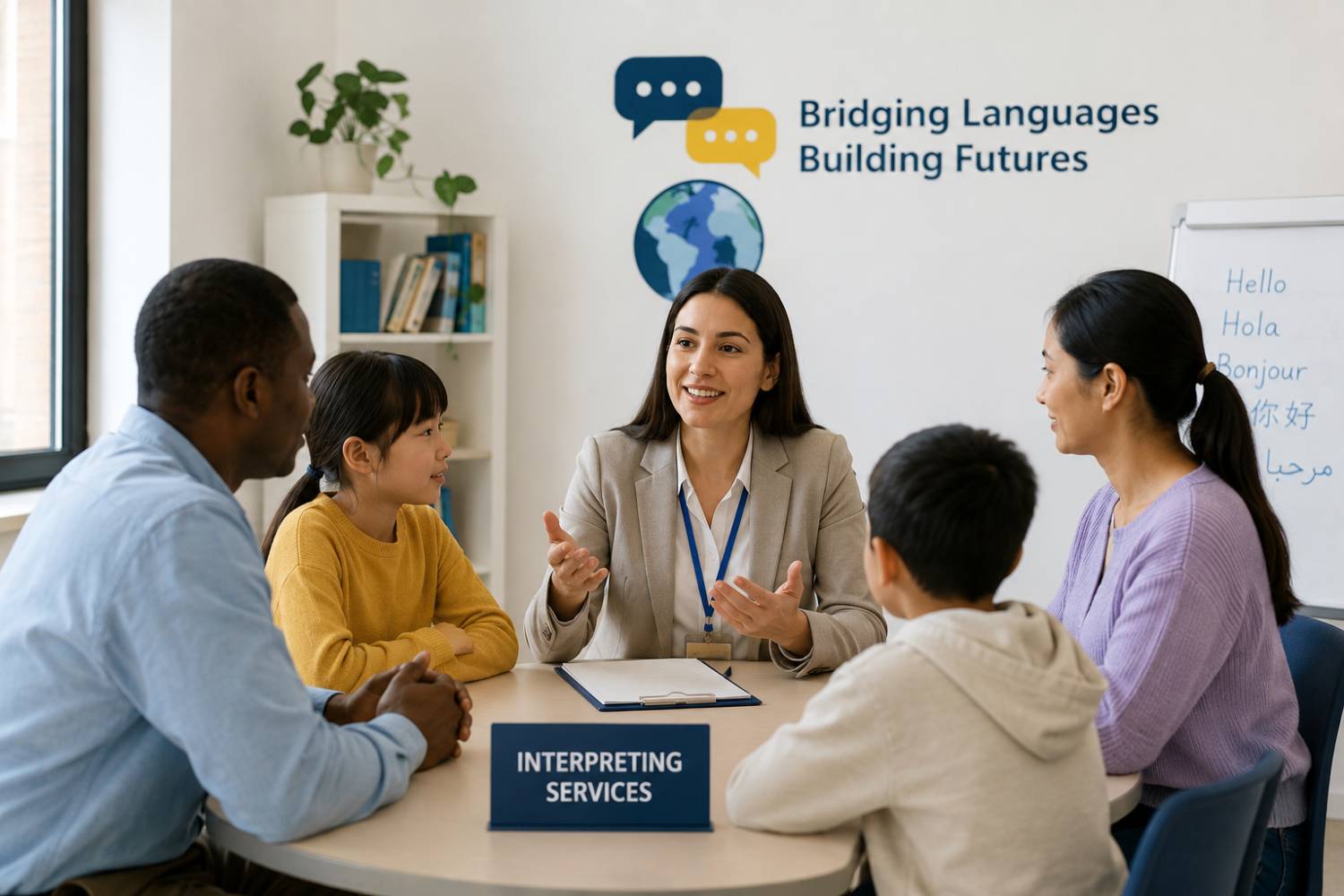
From parent-teacher meetings and student admissions to university orientations, academic conferences, online classes, and educational events, qualified interpreters help people communicate clearly across different languages and cultures.
Professional interpreting is not simply about converting words from one language into another. In an educational environment, interpreters need to understand academic terminology, cultural differences, institutional procedures, and the context of the conversation. A small misunderstanding can affect a student's education, a parent's understanding of their child's progress, or an international student's ability to navigate an unfamiliar academic system.
That is why choosing experienced Education Interpreting and Translation Services is an important step for schools, universities, students, families, and education providers that work in multilingual environments.
What Are Educational Interpreting Services?
Educational interpreting services are professional language services designed to facilitate communication within educational environments.
An educational interpreter communicates spoken or signed information from one language into another while maintaining the original meaning, tone, and context as accurately as possible.
These services can be used in many different situations, including:
Schools and school districts
Colleges and universities
Language schools
International education institutions
Vocational and professional training centers
Online education programs
Parent-teacher meetings
Student enrollment and admissions
Academic conferences
Campus tours
Orientation sessions
Educational workshops
Student support meetings
Special education meetings
Graduation ceremonies
Administrative meetings
Interviews and assessments
Educational interpreting may take place in person, over the phone, or through video platforms, depending on the requirements of the educational institution and the participants.
Professional services can also be combined with document translation, creating a complete language solution for multilingual educational communication.
Why Are Educational Interpreting Services Important?
Education depends heavily on communication.
Students need to understand their teachers. Parents need to understand information about their children's education. International students need to communicate with university staff. Teachers and administrators need to exchange information with families and students from different linguistic backgrounds.
When people cannot communicate effectively, the consequences can go beyond simple inconvenience.
A language barrier may result in:
Misunderstood academic information
Confusion about enrollment procedures
Difficulty understanding school policies
Miscommunication between parents and teachers
Problems understanding academic requirements
Reduced participation in meetings
Difficulty accessing student support services
Confusion about deadlines and important documents
Barriers to participation in educational programs
Professional educational interpreters help reduce these communication barriers and create a more inclusive learning environment.
The role of an educational interpreter is particularly important because educational conversations can involve sensitive, complex, or highly technical information. Professional standards emphasize accuracy, respect, confidentiality, and culturally responsive communication.
Education Interpreting and Translation Services
Although interpreting and translation are closely related, they are not the same service.
Interpreting focuses primarily on spoken or signed communication in real time, while translation focuses on written content.
For educational institutions, both services may be required.
Educational Interpreting
Educational interpreting can help with:
Classroom communication
Parent-teacher conferences
Student interviews
Enrollment meetings
Academic advising
School board meetings
University orientations
Campus tours
Training sessions
Educational seminars
Conferences
Student support meetings
Educational Translation
Education-related translation may include:
Academic transcripts
Diplomas and certificates
School records
Course descriptions
Enrollment forms
Student handbooks
Educational policies
Academic reports
Training materials
Application documents
University information
Course materials
Consent forms
Many educational language providers therefore combine interpreting and translation to offer a broader language-access solution for institutions and students.
Who Can Benefit From Educational Interpreting Services?
Educational interpreting is not limited to schools. Any organization involved in learning, training, or academic communication may benefit from professional interpreters.
Schools and School Districts
Schools often communicate with families who speak different languages. Professional interpreters can support communication between teachers, administrators, students, and parents.
Common situations include:
Parent-teacher conferences
Student enrollment
School orientations
Academic progress meetings
Behavioral meetings
Student support discussions
Educational assessments
Special education meetings
School events
Administrative meetings
Clear communication helps parents participate more effectively in their children's education and ensures that important information is not lost because of language differences.
Colleges and Universities
Higher education institutions increasingly work with international students and multilingual communities.
Professional university interpreting services can support:
Admissions meetings
International student orientation
Academic advising
Campus tours
Faculty meetings
Student interviews
Conferences
Lectures
Workshops
Graduation events
Administrative appointments
For international students, having access to professional language support can make navigating an unfamiliar academic environment considerably easier.
International Students
Moving to another country for education can be challenging even when a student speaks the local language reasonably well.
Academic terminology, administrative procedures, legal documents, and institutional communication can introduce additional difficulties.
Educational interpreters can assist international students during important interactions with:
Admissions departments
Academic advisors
University administrators
Student support teams
Teachers and professors
Accommodation offices
Educational consultants
For written communication, professional translation can also help students understand transcripts, certificates, application documents, and other academic materials.
Parents and Families
Parents play an important role in education, but language barriers can make it difficult for them to participate fully.
An interpreter can assist parents during:
Parent-teacher conferences
Student progress meetings
School orientation
Enrollment discussions
Academic planning
Student support meetings
Meetings with school administrators
The goal is not simply to translate words but to make sure that parents can understand the information being communicated and participate meaningfully in the discussion.
Educational and Training Organizations
Language services are also valuable for professional training providers, vocational institutions, international education organizations, and other learning environments.
Training programs may involve specialized terminology that requires an interpreter with appropriate subject knowledge.
Types of Educational Interpreting
Different educational situations require different interpreting approaches. Selecting the appropriate type of service can improve communication and make the experience more efficient for everyone involved.
In-Person Educational Interpreting
In-person interpreting is suitable for situations where participants need to meet physically.
Examples include:
Parent-teacher meetings
Classroom sessions
Campus tours
Academic conferences
Student interviews
School meetings
University events
The interpreter is physically present and facilitates communication between participants.
Remote Educational Interpreting
Remote interpreting allows participants to communicate through video or telephone platforms.
This can be particularly useful when:
Participants are in different locations
A specific language is required
An interpreter needs to be arranged quickly
The meeting is already being held online
Travel is impractical
Remote interpretation can make language support more flexible for schools, universities, students, and families.
Video Interpreting
Video interpreting combines remote communication with visual interaction.
It can be useful for meetings where facial expressions, visual communication, or sign language are important.
Video interpreting may support:
Online classes
Student meetings
Parent conferences
University appointments
Educational consultations
Remote training sessions
Telephone Interpreting
Telephone interpreting can be useful for short or urgent conversations where video is not necessary.
For example, a school administrator may need to communicate quickly with a parent, or a student may need assistance communicating with an educational institution.
Educational Interpreters for Parent-Teacher Meetings
Parent-teacher conferences are one of the most common situations where educational interpreting is needed.
These meetings can involve detailed discussions about:
Academic performance
Attendance
Classroom behavior
Learning progress
Educational goals
Student strengths
Areas requiring additional support
Future academic plans
If a parent cannot fully understand the language used during the meeting, important information may be missed.
A professional interpreter allows the teacher and parent to communicate directly while helping ensure that the meaning of the conversation remains accurate.
Professional educational interpreting services can therefore help schools build stronger relationships with multilingual families.
Educational Interpreting for Student Enrollment
Enrollment and admissions often involve detailed information and specific procedures.
International or multilingual students may need help understanding:
Application requirements
Registration procedures
Academic prerequisites
Tuition information
Deadlines
Course selection
Student policies
Orientation requirements
Supporting documentation
A qualified interpreter can help students communicate with admissions staff and understand important information during the enrollment process.
For written documents, professional academic translation can complement interpreting services and help ensure that applications and supporting documents are accurately understood.
Educational Translation for Academic Documents
Educational language services often extend beyond interpreting.
Students may need professional translation of documents such as:
Diplomas
Degrees
Academic transcripts
Certificates
Recommendation letters
Course descriptions
School records
Academic reports
Enrollment documents
Accuracy is particularly important when documents are being submitted to universities, government authorities, professional organizations, or other institutions.
Academic terminology should be translated consistently and appropriately rather than relying on literal word-for-word translation.
In some countries and institutions, documents may also require certification, notarization, or other formal requirements. The exact requirements depend on the destination institution and jurisdiction.
Educational Interpreting for Universities and Higher Education
Universities have increasingly international communities, making effective multilingual communication an important part of student services.
University interpreting services may be required throughout the student journey, from the first admissions conversation to graduation.
For example, interpreters can support:
Admissions
International students may need language assistance when discussing application procedures, academic requirements, or university programs.
Orientation
Orientation sessions often contain a large amount of important information about campus services, academic expectations, student policies, and resources.
Academic Advising
Students may need to discuss course selection, academic performance, degree requirements, or future plans with an advisor.
Campus Services
Interpreting can help students communicate with different university departments and understand available services.
Conferences and Events
Universities frequently organize international conferences, seminars, workshops, and academic events where multilingual communication may be required.
Educational Interpreting for Online Learning
Online education has created new opportunities for students around the world, but it can also introduce language barriers.
Virtual classrooms may include students and teachers from different linguistic backgrounds.
Educational interpreting can support:
Online lectures
Virtual classrooms
Webinars
Online workshops
Remote training
Virtual student meetings
Academic consultations
International education programs
Remote interpreting solutions can make it easier for educational organizations to provide language support without requiring interpreters or participants to travel.
What Makes a Good Educational Interpreter?
Not every bilingual speaker is automatically qualified to work as an educational interpreter.
Educational interpreting requires more than fluency in two languages.
A professional interpreter should ideally have:
Strong Language Skills
The interpreter should have a strong command of both the source and target languages.
Academic Vocabulary
Education involves terminology related to subjects, qualifications, admissions, assessment, curriculum, and academic administration.
Cultural Awareness
Cultural differences can influence communication styles, expectations, and the interpretation of certain expressions.
Accuracy
An interpreter should communicate the speaker's meaning without unnecessarily changing, omitting, or adding information.
Professionalism
Educational meetings may involve confidential or sensitive information, making professionalism and discretion essential.
Listening Skills
Interpreters need to listen carefully, process information quickly, and communicate it clearly.
Subject Knowledge
Depending on the assignment, knowledge of a particular academic field may be especially useful.
Professional educational interpreting therefore requires a combination of linguistic ability, communication skills, subject knowledge, and professional judgment.
Benefits of Professional Educational Interpreting Services
Choosing professional educational interpreters can provide several important benefits.
Better Communication
Participants can communicate more clearly and reduce misunderstandings.
Greater Accessibility
Students and families who speak different languages can participate more actively in educational processes.
Improved Student Experience
International students can feel more confident when they have access to reliable language support.
Stronger Family Engagement
Parents can better understand their children's educational progress and communicate with teachers.
Reduced Misunderstandings
Professional interpreters help reduce the risk of important information being misunderstood.
Professional and Culturally Appropriate Communication
Experienced interpreters understand that effective communication involves more than literal language conversion.
Greater Flexibility
Depending on the provider, educational interpreting may be available in person, by telephone, or through video platforms.
How to Choose the Right Educational Interpreting Service
Choosing an interpreter should not be based solely on language availability.
Before selecting a provider, consider several factors.
1. Check Language Expertise
Make sure the interpreter is experienced in the required language pair and understands relevant regional variations and dialects.
2. Consider Educational Experience
An interpreter familiar with schools, universities, academic terminology, and educational procedures may be better prepared for specialized assignments.
3. Ask About Interpreting Formats
Determine whether you need:
In-person interpreting
Video interpreting
Telephone interpreting
Simultaneous interpreting
Consecutive interpreting
4. Consider Confidentiality
Educational discussions can involve personal student information. Choose professionals who understand the importance of confidentiality and responsible handling of sensitive information.
5. Evaluate Availability
If your institution regularly needs interpreting, consider whether the provider can support both planned and urgent assignments.
6. Look for Professional Quality
Experience, qualifications, language proficiency, subject knowledge, and communication skills should all be considered when selecting an interpreter.
Educational Interpreting vs. General Interpreting
Educational interpreting has many similarities to general interpreting, but the educational environment presents its own challenges.
A general interpreter may be highly proficient in a language but unfamiliar with:
Academic terminology
Educational procedures
School administration
University systems
Student support terminology
Curriculum-related language
Academic qualifications
An interpreter with experience in education is more likely to understand the context and terminology of the assignment.
This is particularly important when the conversation involves detailed academic information or decisions that can affect a student's education.
Why Human Educational Interpreters Still Matter
Technology has transformed the language services industry. Automated translation and AI-powered language tools can be useful for certain everyday tasks, but educational communication often requires more than literal language conversion.
Human interpreters can consider:
Context
Tone
Cultural nuances
Ambiguous expressions
Specialized terminology
Conversation dynamics
The needs of the participants
In a classroom, parent meeting, university appointment, or academic conference, communication may involve questions, interruptions, clarification, and context-dependent meaning.
A professional human interpreter can respond to these dynamics in real time.
Find Professional Educational Interpreting Services with Hebosa
Finding the right interpreter does not have to be difficult.
If you are looking for professional educational interpreting services, you can use Hebosa to find experienced translators and interpreters for your language needs.
Whether you need support for a school meeting, university appointment, academic event, student communication, or another educational situation, choosing an experienced language professional can help make communication clearer and more effective.
At Hebosa, you can find some of the best translators and interpreters for different language and communication needs.